The Perfect Cornhole Tournament Bracket: A Player & Director's Guide
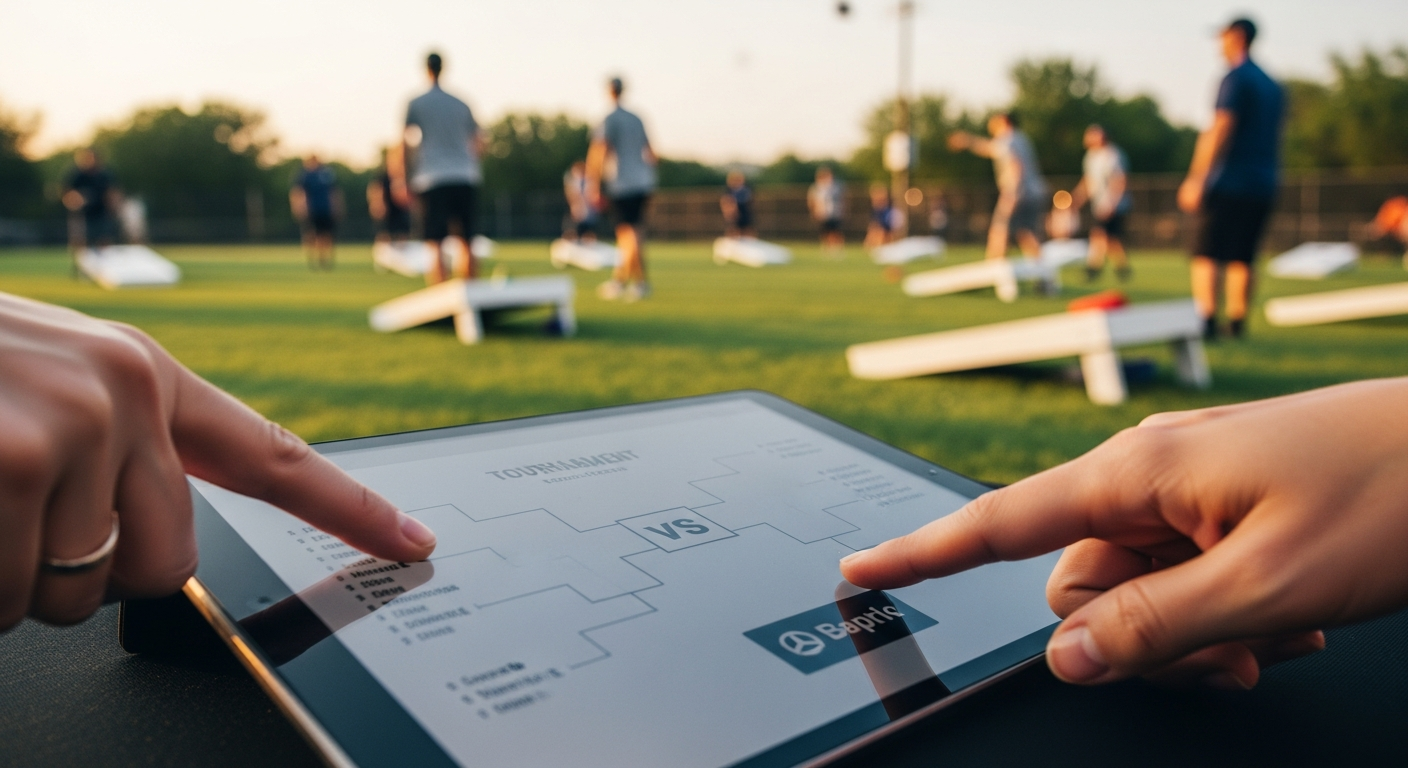
It's the map to glory. The flowchart of fate. The document that can make or break your Saturday. We're talking about the cornhole tournament bracket, and whether it's scribbled on a napkin or printed crisp on tabloid paper, it's the heart and soul of any competitive event.
For the casual player, the bracket might seem like just a bunch of lines. But for anyone who has felt the sting of a first-round exit or the thrill of a loser's bracket comeback, you know it's so much more. The structure of that bracket dictates the flow, fairness, and overall feel of the entire day.
So whether you're looking to run your own neighborhood championship or trying to understand the format at your next regional tournament, let's break down the art and science behind a perfect cornhole bracket — and the free tool we built to print one out in seconds.
In a hurry? Skip to our free Bracket Builder — pick teams, choose single or double elimination, and download a print-ready PDF.
The Great Debate: Single vs. Double Elimination
This is the first, and most important, decision a tournament director makes. It sets the tone for everything. While there are other formats like Round Robin, these two are the pillars of tournament play.
The Case for Single Elimination: Fast, Brutal, and Simple
Single elimination is exactly what it sounds like: you lose, you're out. It's the March Madness of cornhole. Every game is an elimination game, carrying the ultimate pressure.
Pros:
- Speed: It's the fastest way to get from a big field of players to a single champion. If you have limited boards or limited time, this is your format.
- Simplicity: It's incredibly easy to understand and follow. Win and advance. Lose and go home (or at least, go grab another beverage).
- High Stakes: The do-or-die nature of every single game creates a ton of excitement.
Cons:
- One Bad Game: We've all been there. You get a cold streak, your opponent gets hot, and suddenly your day is over before it really began. It's unforgiving.
- Doesn't Always Find the Best Team: A single-elimination bracket finds the team that didn't lose that day. That isn't always the same as finding the best team. A bad matchup or a bit of bad luck can knock out a top contender early.
Our take: Single elimination is perfect for casual backyard BBQs, fundraisers where speed is key, or informal bar tournaments. It's fun, it's fast, but it's not the format for determining a true champion.
Why Double Elimination Rules the Competitive Scene
Walk into any serious cornhole tournament, from a local league to an American Cornhole League (ACL) pro event, and you'll almost certainly see a double-elimination bracket. In this format, you have to lose twice to be eliminated.
Here's how it works: Everyone starts in the "Winner's Bracket." If you lose, you drop down to the "Loser's Bracket" (sometimes called the "second chance" or "comeback" bracket). You stay alive in the loser's bracket until you lose a second time. The tournament culminates in a final match between the winner of the Winner's Bracket and the winner of the Loser's Bracket.
Pros:
- Fairness: This format gives a much better chance for the best teams to rise to the top. One off game won't end your day.
- More Playtime: Players, especially those who paid an entry fee, are guaranteed at least two games. More cornhole is always a good thing.
- The Epic Comeback: The loser's bracket creates incredible storylines. There's nothing more exciting than watching a team battle all the way back from an early loss to make it to the finals.
Cons:
- Time: A double-elimination tournament takes significantly longer to run. You need more time and more boards.
- Complexity: It can be a little confusing for first-timers to track both brackets — though a printed bracket PDF makes it obvious at a glance.
Our take: For any event that calls itself a competitive tournament, double elimination is the only way to go. It's the established standard for a reason. It provides the most accurate results and the best player experience.
Seeding: The Art and Science of a Fair Fight
Okay, you've chosen your bracket type. Now, how do you decide who plays who? That's where seeding comes in, and it's arguably as important as the bracket format itself. Good seeding prevents the two best teams from facing off in the first round, ensuring a more balanced and exciting tournament.
Common Seeding Methods
- Random Draw: This is the easiest method. You literally pull names out of a hat. It's pure chaos and the definition of unfair for a competitive event, but it works just fine for a spontaneous game with friends.
- Round Robin / Pool Play: This is the gold standard for seeding a one-day tournament. The field is broken into smaller groups (pools), and you play everyone in your pool once. Your record (and often, your point differential) in pool play determines your seed in the main elimination bracket. This is a fantastic way to get a fair seed based on how you're actually throwing that day.
- Player Rankings: For established leagues and pro tours, this is the way. Players are seeded based on their existing rank, which is determined by points earned at previous events. This is the most accurate method, but it requires a pre-existing system. Curious who's at the top? Browse the ACL pros and ACO pros currently competing.
Our take: If you're running a local tournament, a short round-robin or pool play to seed your main double-elimination bracket is the ultimate setup. It guarantees every team a handful of games and creates a bracket that feels earned and fair.
Make Your Bracket in 60 Seconds — Free
Remember the days of a giant poster board, a Sharpie, and someone yelling, "Team Chaos vs. The Bag Boys, you're up on Court 3!"? There's a certain nostalgia to that, but a clean printed bracket on the wall makes everyone's day better — and you don't need expensive tournament software to get one.
We built a free Bracket Builder right here on CornholeBoards.us. Type in your team names, pick single or double elimination, and download a print-ready PDF. That's it. No sign-up, no app to install, no per-tournament fee.
Use it for:
- Backyard tournaments and family BBQs
- Fundraiser brackets at bars and breweries
- Corporate event cornhole tournaments
- Charity outings and league nights
The PDF prints cleanly on US Letter for small brackets (up to about 16 teams) and Tabloid (11×17″) for bigger fields or double-elimination layouts. Print at 100% scale — don't "fit to page" or your boxes will get crunched.
For very large multi-day events (think 64+ teams across multiple divisions), bracket software with live updates is worth the investment. For everything else, a printed bracket on the wall and a sharp pen still wins. Hand it to the director or league organizer running your local league and they'll thank you.
The Unwritten Rules of Bracket Etiquette
Finally, being a good tournament citizen goes a long way. Whether you're a player or a director, following some simple etiquette makes the day better for everyone.
For Players:
- Pay attention. Know the format before you start. Keep an eye on the bracket (or your phone) so you know when your next match is coming up. Don't be that person the whole tournament is waiting for.
- Report your scores promptly. As soon as your game is over, the winner should report the score so the bracket can be updated and the next match can be called. (Need a refresher on how scoring works? Read our scoring guide.)
- Be a good sport. Congratulate your opponents, win or lose. If you get sent to the loser's bracket, don't pout. See it as a challenge and start your comeback tour.
For Tournament Directors:
- Be clear. Explain the rules and the format at a player's meeting before the first bag is thrown.
- Be prepared. Have a plan for disputes, no-shows, and any other issues that might crop up. Brush up on the official cornhole glossary so you can settle disputes with the right terminology.
- Keep it moving. Have your court assignments ready, your bracket printed and posted, and your scorekeepers briefed. The biggest killer of a tournament's vibe is excessive downtime.
A bracket is more than just a structure for a game; it's the narrative of the day. It tells a story of upsets, comebacks, and dominant performances. Understanding how it works, whether you're playing in it or running it, elevates the entire experience from a simple game to a true sporting event.
Ready to run your tournament?
Spin up your printable bracket right now — it takes about a minute.
➜ Open the free Bracket Builder
And if you want to give your event some extra flair, design custom board faces to match your tournament theme — wedding monograms, team logos, holiday graphics, anything you want. We print on full-color peel-and-stick vinyl wraps and ship to your door.
As an Amazon Associate we earn from qualifying purchases.
Keep exploring
⭐Reviews & guides
Recommended boards, bags, lights, and accessories.
🏷️Brands & companies
Board makers, bag makers, apparel, and accessory brands.
📅Tournaments
Live ACL / ACO event listings + local tournaments.
🥇Meet the pros
Active ACL & ACO pro rosters with hometowns and rankings.
🎨Custom Designer
Drag-and-drop a custom board face in your browser.
🖼Community gallery
Browse, vote, remix, or buy designs from other users.