Cornhole Bags Explained: A Player's Guide
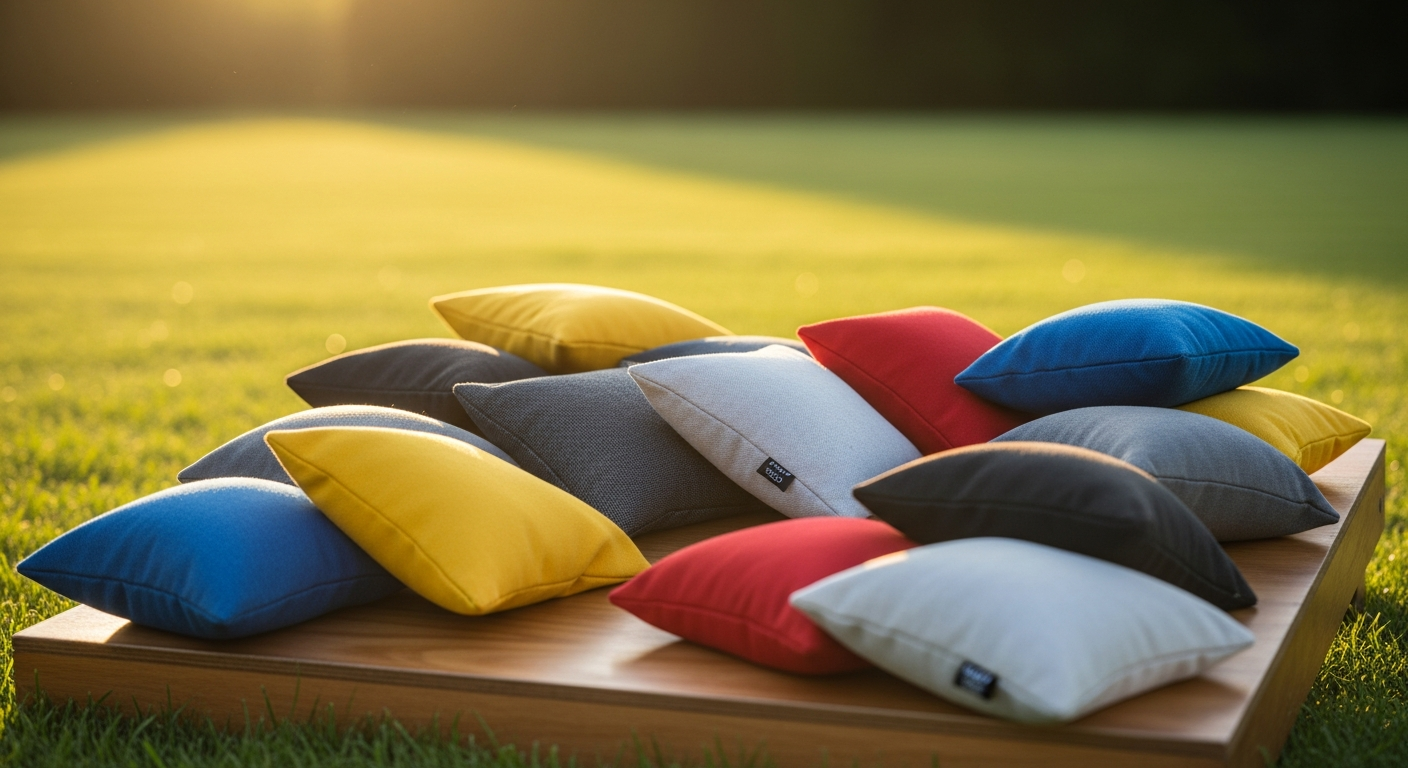
Not long ago, if you wanted to play cornhole, your bag options were simple: what color duck cloth do you want, and do you want it filled with corn or not? Today, stepping into the world of cornhole bags feels like walking into a high-tech laboratory. You’re hit with terms like “speed ratings,” “hybrid carpet,” “pro-blend fill,” and a dizzying number of brands all claiming to have the secret sauce.
It’s enough to make a new player’s head spin. But here’s the good news: all that technology has made the game more strategic, more skillful, and a lot more fun. The right set of bags won't just improve your game—it will define it.
Let's cut through the noise. This is your definitive guide to understanding the modern cornhole bag, from the backyard to the pro circuit.
The Great Divide: Corn vs. Resin
Before we get into space-age fabrics, let's start with the basics: what’s inside the bag? The original bags were filled with whole kernel corn, and while they have a certain nostalgic charm, they’ve been almost entirely replaced in serious play for a few key reasons.
Corn-Filled Bags: These bags create a fine dust as the corn breaks down over time. Some players love this “dust,” believing it helps the bags grip and slide better. However, corn is susceptible to moisture, which can cause it to rot, mold, or change weight and feel. Oh, and critters love them.
Resin-Filled Bags: The modern standard is a filling of plastic resin pellets. This is a game-changer. Resin is weather-proof, maintains a consistent weight and feel for the life of the bag, and doesn't create any dust. Every single competitive and professional bag you see today is filled with resin. For anyone playing in a league or just wanting a durable, consistent set for the backyard, resin is the only way to go.
Understanding Pro-Style Bags: The Big Three
When people talk about modern bags, they're talking about pro-style, dual-sided bags. These bags have a different fabric on each side, offering two distinct playing surfaces in one. To understand them, you need to grasp three key concepts: Speed, Fill, and Feel.
H3: The All-Important Speed Scale
This is the single most important factor in choosing a bag. Each side of the bag is assigned a “speed rating,” typically on a scale of 1 to 10. A “1” is the slowest (grippiest), and a “10” is the fastest (slickiest).
Slow Side (typically rated 1-5): This is your control side. It’s often made of suede, microfiber, or a “carpet-like” material. You use the slow side when you want the bag to land and stop right where you throw it. It’s perfect for a “block” shot to clog up the lane for your opponent, or for a delicate “cut” shot to navigate around other bags.
Fast Side (typically rated 6-10): This is your “go” side. It’s usually made of a synthetic, polyester-based fabric. When the board is cluttered with bags, you use the fast side to slide, push, and bully your way to the hole. It's your weapon for collecting bags already on the board and pushing them in for big points.
A Crucial Caveat: There is no industry standard for speed ratings. A “6” from one company might feel like a “7” or even an “8” from another. These numbers are best used to compare bags within the same brand. The best way to understand a bag’s true speed is to watch reviews or, even better, get your hands on a set.
H3: Fill & Feel: It's Not Just Plastic
You’d think all resin is the same, but you’d be wrong. The type, shape, and amount of resin fill dramatically affect how a bag plays.
Fill Shape: Some bags use tiny, bead-like pellets, while others use larger, disc-shaped resin. This impacts how the bag shifts in your hand and how it lands and moves on the board.
Fill Volume (aka “The Flop”): How much fill is in the bag? A bag stuffed to the gills will feel stiff and might be more prone to kicking or bouncing. A bag with less fill will feel “floppy” or “loose.” This floppiness is highly desirable for many players because it allows the bag to contort around other bags and more easily drop into the hole. This quality is often called “hole-friendliness.”
The “Pro-Blend” Mystery: Many brands use a proprietary mix of different resin shapes and sizes to achieve a specific feel. This blend is what gives many high-end bags their unique character.
H3: The Fabric Revolution
The materials used in today’s bags are a universe away from simple duck cloth. The slow side is often a synthetic suede or a unique material affectionately known as “carpet.” Carpet bags have become wildly popular in the competitive scene because they offer incredible control and the ability to execute complex shots that just aren't possible with faster materials. The fast side is almost always a slick synthetic fabric designed for maximum slide.
Which Bags Are Right for You?
Okay, we've covered the theory. Now, let's get practical. The right bag for you depends entirely on who you are as a player.
For the Backyard Hero
You play at BBQs and family gatherings. You want something that will last and feel better than the corn-filled bags that came with your board set.
Your Mission: Look for a quality set of all-weather, resin-filled bags. You don’t need to obsess over speed ratings yet. A simple dual-sided bag with a moderate speed difference (like a 5 slow side and an 8 fast side) is a perfect, versatile choice. It gives you a feel for strategic play without being too extreme in either direction.
For the Aspiring Leaguer
You’re starting to take the game more seriously. You've learned to throw a flat bag, and you're thinking about strategy.
Your Mission: This is where you need to invest in a quality, ACL-approved pro-style bag. Start with a versatile, middle-of-the-road bag. A popular combination is a bag with a speed rating around 4-6 on the slow side and 7-9 on the fast side. This allows you to throw blocks but also have enough speed to push when you need to. Many players at this level fall in love with “carpet” bags for the incredible control they offer.
For the Competitive Player
You live and breathe cornhole. You understand how board conditions (humidity, temperature) can change everything. Your throw is consistent, and you need gear that can keep up.
Your Mission: You don’t just need one set of bags—you need an arsenal. Competitive players often carry multiple sets to adapt to changing conditions.
- Your “Control” Set: For slower, stickier boards (think humid days), you’ll want a faster set of bags that can still slide.
- Your “Speed” Set: For faster, slicker boards (think indoor, climate-controlled play), you’ll want a slower, more controllable bag, like a carpet bag, to keep it from flying off the back.
A Quick Word on Bag Care
Your new pro-style bags will likely feel stiff right out of the box. They need to be “broken in.” The best way to do this is simply to play with them. If you're impatient, you can toss them in a dryer on AIR DRY or NO HEAT with a couple of towels for 30-45 minutes.
Warning: Never use fabric softener, boil, or wash your bags with harsh chemicals. This will destroy the fabrics, alter how they play, and void any warranty.
The Perfect Bag is Personal
There is no single “best” cornhole bag. The perfect set is the one that complements your throwing style, feels right in your hand, and gives you the confidence to make any shot in your playbook.
Don’t be afraid to experiment. Ask friends at your local league if you can throw their bags for a few frames. What works for a top pro might not work for you. The journey of finding your perfect bag is part of the fun. Now get out there and throw!
Popular Bag Brands to Look At
If you're shopping for upgrade-tier bags, these brands consistently come up in ACL conversations and tournament packs. Each name links to a current Amazon search so you can compare prices and stick/slick variants side-by-side:
- Play Platoon — search current listings
- GoSports — search current listings
- Titan Bags — search current listings
- Cornhole365 — search current listings
- ACA Synergy — search current listings
- Cornhole Ace — search current listings
As an Amazon Associate we earn from qualifying purchases at no extra cost to you.
As an Amazon Associate we earn from qualifying purchases.
Keep exploring
⭐Reviews & guides
Recommended boards, bags, lights, and accessories.
🏷️Brands & companies
Board makers, bag makers, apparel, and accessory brands.
📅Tournaments
Live ACL / ACO event listings + local tournaments.
🥇Meet the pros
Active ACL & ACO pro rosters with hometowns and rankings.
🎨Custom Designer
Drag-and-drop a custom board face in your browser.
🖼Community gallery
Browse, vote, remix, or buy designs from other users.